


Employee rewards and recognition programs are no longer “nice to have.” In 2026, they’re a core lever for engagement, retention, and performance—especially as organizations navigate hybrid work, tighter budgets, and rising expectations for personalization and impact.
According to Gallup, global employee engagement levels remain stagnant, while organizations with strong recognition practices see significantly higher productivity, lower turnover, and stronger customer outcomes. The difference isn’t whether companies reward employees—it’s how intentionally they do it.
The most effective reward programs are aligned with business goals and behaviors, are easy to administer and defend, and are timely and personalized.
Let’s look at how leading organizations put these principles into practice—and what you can apply to your own program.
Salesforce: Recognition Embedded Into Daily Workflows
Salesforce provides a compelling example of how recognition can be built into everyday work, rather than treated as a once-a-year bonus or special event.
Instead of placing all recognition at the end of a cycle, Salesforce’s culture emphasizes frequent peer and team recognition that aligns with core values and behaviors. Programs such as the V2MOM Awards allow employees to nominate coworkers who embody Vision, Values, Methods, Obstacles, and Measures — the five key drivers in the company’s strategic framework. This not only spotlights performance but reinforces the behaviors the organization wants to see.
Employee recognition itself has a measurable business impact: according to Gallup research, organizations that ensure employees feel recognized report significantly higher engagement and retention outcomes — but only about one in three U.S. workers says they received recognition in the last week.
Key takeaway: Align recognition programs with values and workflows; recognition works best when it’s timely, visible, and tied to the behaviors that drive performance.
Delta Air Lines: Recognition That Signals Shared Success
Delta Air Lines serves more than 180 million travelers each year, but one of its most consistent differentiators is culture.
When CEO Ed Bastian publicly redirects praise to Delta’s frontline employees, the gesture itself is simple—but the signal is powerful: success is shared.
"Appreciate the shout out...but Delta would be nothing without our 90,000 people. They deserve all the credit."
-Ed Bastian
That philosophy shows up structurally, not just symbolically. In strong financial years, Delta has distributed profit-sharing bonuses that meaningfully connect company performance to employee contribution. Research consistently shows that employees are more engaged when recognition is tied to outcomes they can see and influence.
Key takeaway: Recognition doesn’t have to be complex, but it does have to be credible. Employees respond when leadership clearly connects appreciation to results and reinforces that connection consistently.
For organizations without Delta-sized bonus pools, the lesson still applies. Spot rewards, non-cash incentives, and choice-based recognition can deliver similar motivational impact without long-term fixed costs, improving both employee satisfaction and workforce retention.
Fuse: Non-Cash Rewards That Shape Daily Experience
Fuse has been named one of Vermont’s Best Places to Work for over a decade, and their approach highlights an often-overlooked truth: rewards don’t always need to be monetary to be meaningful.
Fuse emphasizes perks and experiences that improve day-to-day quality of life, including:
-
Flexible schedules and remote work options
-
Wellness and fitness stipends
-
Bringing pets to work
-
Weekly yoga and on-site skateboard ramp
-
PTO tied to volunteerism and community engagement
- Milestone rewards that combine time off with experiential incentives
These benefits reinforce autonomy, purpose, and balance—three drivers that modern employees consistently rank above cash alone. Even better: investing in employee happiness has proven to be an investment in the business, with happy employees consistently showing higher productivity levels.
Key takeaway: High-impact reward programs focus on how employees feel working for you, not just what they earn. Non-cash incentives, when aligned with values and lifestyle, can outperform traditional bonuses in loyalty and engagement.
Apple: Clear Goals, Clear Rewards
Apple demonstrates how clarity amplifies the effectiveness of rewards, especially in wellness and behavior-change programs.
By rewarding employees for wearing their Apple Watch and using the device activity data to define specific, achievable goals, Apple removes ambiguity from recognition. Employees know exactly what’s expected, and rewards reinforce progress in real time.
This approach mirrors broader trends in 2026: outcome-based incentives outperform awareness-only initiatives. Programs that reward completion, adherence, or participation consistently see higher follow-through than those that rely on education alone.
Key takeaway: Rewards work best when expectations are explicit and progress is measurable. Clear criteria + timely reinforcement = sustained behavior change.
GiftCard Partners: Scalable Spot Rewards
As an 11-time winner of NABR's National Best and Brightest Company to Work For award, GiftCard Partners has spent more than 15 years helping organizations design and execute reward programs that are easy to run—and easy to justify internally.
Internally, GiftCard Partners uses spot gift card rewards alongside verbal recognition to reinforce performance in the moment. The reason is simple: immediacy and choice matter.
Modern workforces are diverse in needs, preferences, and lifestyles. Gift card rewards consistently rank highest for:
-
Flexibility
-
Perceived value
-
Memorability
What’s changed in 2026 is how these rewards are delivered and managed.
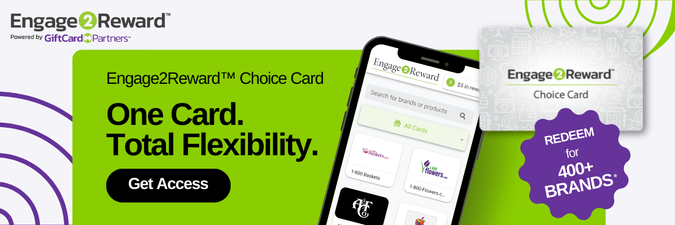
The Engage2Reward™ Gift Card Ordering Platform enables organizations to:
-
Order and distribute digital or physical rewards at scale
-
Customize messaging and branding for greater impact
-
Align rewards to program goals using filtered and choice-based options
-
Track and report on reward spending for finance, HR, and compliance stakeholders
Instead of ad-hoc fulfillment or manual processes, the Engage2Reward Platform provides the infrastructure that turns recognition strategy into repeatable execution.
Key takeaway: The best reward programs combine human recognition with operational rigor. Platforms matter—not just for delivery, but for governance, reporting, and long-term sustainability.
CVS: Rewarding Choices That Support Daily Life
CVS represents another recent example of rewards that go beyond traditional perks. While the company’s annual incentive plans formally reward performance outcomes, many internal recognition efforts — particularly those focusing on wellness and everyday employee experience — center on practical choice.
Gallup research highlights that employees who feel adequately recognized are 45% less likely to leave their jobs, yet a large percentage of workers still report not receiving recognition frequently. Rewarding employees with CVS® gift cards — which can be used for essentials such as groceries, prescriptions, or personal care — helps make recognition personally relevant while supporting whole-person well-being.
Key takeaway: Choice matters. Rewards that intersect with daily life and well-being carry more meaning and contribute to retention, especially when delivered in ways that feel personal and immediate.
Bringing the Lessons Together
Across these programs, there are recurring themes that align perfectly with how the Engage2Reward Platform helps clients succeed:
-
Timeliness & frequency: Recognition matters most when it happens close to the moment of performance, not months later.
-
Personal relevance: Rewards that respect employee preferences (e.g., choice of brand or type) create a sense of value and appreciation.
-
Operational rigor: Scalable programs require tools that make delivery, reporting, and governance simple and defensible.
-
Alignment with goals: Rewards tied to measurable outcomes and organizational values amplify behavior you want repeated.
Through platforms like Engage2Reward, organizations can automate, track, and measure rewards from spot recognition to milestone programs, while applying budget controls, reporting, and brand personalization at scale.
Ready to Evolve Your Program for 2026?
Whether you’re designing a first-time recognition strategy or optimizing an existing one, the key is to learn from the best and then make those practices your own with tools and data that bring them to life. So give our team a call today and start maximizing your rewards strategy for bigger, better results.




.png?width=600&height=600&name=3D8DC522-2245-490E-AA26-63567A199A4C%20.png)