



Employee engagement has been a stated leadership priority for years, but HR teams are under growing pressure to prove that engagement and wellness initiatives deliver measurable business value. Budgets are scrutinized more closely, finance leaders want outcomes they can quantify, and employees expect programs that actually support their well-being.
The most effective HR strategies today move beyond culture statements and one-size-fits-all perks. Instead, they use targeted, data-backed incentives to increase participation, drive healthier behaviors, and improve retention while giving finance teams the ROI visibility they need. This shift is where solutions like the Engage2Reward™ Gift Card Ordering Platform play a critical role: providing the infrastructure that turns engagement strategy into scalable, measurable execution.
Below are the key wellness and incentive trends HR leaders should understand as they plan for the year ahead.
1. Engagement Is Now Measured by Outcomes, Not Sentiment
Employee engagement is no longer evaluated by annual surveys alone. Leadership teams increasingly want to understand how engagement connects to retention, absenteeism, productivity, and healthcare costs.
Research from Gallup continues to show that employee engagement remains stubbornly low, with recognition and well-being among the strongest drivers of performance and loyalty. Meanwhile, organizations that link engagement programs to measurable behaviors—such as participation rates or program completion—are better positioned to defend spend during budget reviews.
What this means for HR: Programs that track participation and follow-through are easier to justify than those focused purely on morale.
The Engage2Reward Platform helps HR teams move beyond anecdotal success by tracking incentive distribution and participation at scale. With centralized reporting and fulfillment, engagement efforts become easier to measure, explain, and optimize over time.
Beyond fulfillment and reporting, modern engagement programs require structure. The Engage2Reward Platform includes built-in campaign management tools that allow HR teams to design incentive campaigns around specific behaviors—such as wellness challenges, benefits enrollment, or recognition milestones—while maintaining consistency, timing, and budget control. Personalization features, including custom messages, branded visuals, and tailored reward selections, help reinforce why the incentive was earned, increasing its emotional impact and effectiveness.

2. Preventive Wellness Incentives Take Center Stage
Wellness programs have expanded far beyond gym reimbursements. In 2026, HR leaders are prioritizing preventive health, mental wellness, and lifestyle support—areas that directly influence long-term costs and employee resilience.
According to SHRM, mental health and well-being remain top workforce priorities, particularly as burnout and stress continue to impact retention. Incentives tied to preventive behaviors—such as annual screenings, mental health check-ins, or wellness challenges—help drive adoption of benefits that often go underutilized.
Why incentives matter: Without a motivating nudge, many employees simply don’t engage with preventive programs, even when those benefits are fully covered.
According to one study, employers with incentive-driven health efforts see participation rates that are roughly 22% higher than those without similar incentives—showing that incentives don’t just nudge a few individuals, they can meaningfully lift engagement across an entire program.
Data from other industry surveys showed health screenings delivered with incentives had a positive participation rating of 60%—compared to just 32% without incentives—while fitness challenges saw participation jump from 30% to 41% when incentives were involved.
3. Choice-Based Rewards Reflect a Diverse Workforce
The modern workforce spans generations, lifestyles, and personal priorities. As a result, choice-based incentives have become a core trend in 2026 wellness and engagement strategies.
Rather than guessing what employees value, organizations are shifting toward flexible rewards—like choice-based gift cards, prepaid reward cards, and purpose-built incentive cards—that allow individuals to decide what’s most meaningful to them. This flexibility increases perceived value while reducing friction for program administrators.
Key takeaway: Choice-based incentives respect individual needs while maintaining program consistency and control.
Through the Engage2Reward Platform, organizations can centralize access to a range of customizable reward options, including:
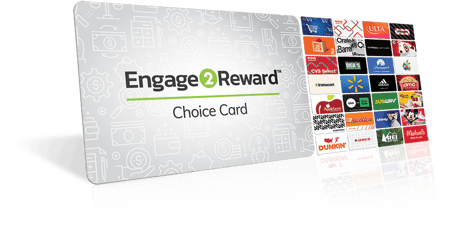
- General choice-based rewards like the Engage2Reward™ Choice Card
- Health and wellness–focused cards tailored to preventive care, fitness participation, or healthy lifestyle behaviors
- Filtered or category-specific prepaid cards that support approved spend categories while maintaining compliance and budget controls
And with integrated campaign management and personalization tools, organizations can align custom messaging, timing, and reward options to specific initiatives, ensuring recognition and wellness incentives feel intentional rather than transactional.
4. Digital Delivery and Instant Fulfillment Are the New Standard
With hybrid and distributed teams now the norm, digital-first incentive delivery is no longer optional. Employees expect rewards to be delivered instantly via email or SMS, without delays or manual processes.
Digital and physical reward flexibility also supports global or multi-location teams, ensuring engagement moments feel timely and relevant. Centralized platforms that manage ordering, fulfillment, and reporting help HR teams scale programs without increasing administrative burden.
How Engage2Reward supports modern workforces: HR teams can deliver digital gift card rewards instantly via email or SMS—perfect for reinforcing wellness actions, recognition moments, or program milestones in real time. Immediate delivery increases participation and perceived value while eliminating fulfillment delays and manual follow-up.
5. Data-Backed People Strategies Win Finance Buy-In
Organizations using data-driven people strategies consistently outperform peers, according to McKinsey. The same principle applies to engagement and wellness programs.
When incentives are tied to specific behaviors—and participation and utilization are tracked—HR leaders can speak the language of finance. Metrics such as adoption rates, completion percentages, and cost per participant make engagement initiatives easier to evaluate alongside other business investments.
This shift reframes incentives as infrastructure, not “nice-to-have” perks.
How the Engage2Reward Platform helps: Built-in tracking and reporting make it easier to connect incentives to outcomes, helping HR teams demonstrate ROI and strengthen alignment with finance stakeholders.
6. Compliance-Friendly Incentives Gain Importance
For regulated industries like healthcare, public sector, and nonprofits, incentive compliance remains critical. HR leaders are increasingly seeking incentive options that support program goals while aligning with regulatory requirements.
Filtered or restricted-use reward cards, along with controlled distribution and reporting, help organizations confidently deploy incentives without introducing risk, especially in wellness, benefits enrollment, or public-sector programs.
Why platform control matters: The Engage2Reward Platform supports compliance-friendly incentive strategies through controlled reward options, flexible fulfillment, and centralized oversight—reducing risk while still motivating participation.
Turning 2026 Trends Into Action
The most successful wellness and engagement programs in 2026 share three characteristics:
- They drive measurable behaviors, not just positive sentiment
- They use incentives to increase participation and follow-through
- They align HR goals with finance expectations through clear reporting
The Engage2Reward Platform supports these trends by enabling choice-based incentives, instant digital delivery, centralized fulfillment, and reporting that helps HR teams demonstrate ROI with confidence.
As engagement expectations rise and budgets tighten, incentives are no longer an add-on—they’re the bridge between intention and execution.
Next steps: As you plan 2026 wellness and engagement initiatives, consider how campaign management, personalization, and real-time reporting can elevate results. The Engage2Reward Platform helps HR teams modernize incentives, increase participation, and clearly demonstrate value to leadership and finance. Register for platform or connect with our team to learn more about flexible, scalable incentive options for today’s workforce.




.png?width=600&height=600&name=3D8DC522-2245-490E-AA26-63567A199A4C%20.png)