


Combat Rising Automotive Costs with Gift Card Rewards
As we navigate through 2024, rising automotive maintenance and operation costs are becoming a significant concern for many Americans. While fuel prices remain a pressing issue, the broader impact of vehicle maintenance costs cannot be overlooked. Recent data from the U.S. Bureau of Labor Statistics indicates that automotive maintenance and repair costs have surged by 5.7% over the past year, adding to the financial burden on households. In response to this growing challenge, companies looking to reward and support their employees should consider offering AutoZone® and Jiffy Lube® gift cards.
Caltech Study Points to Small Incentives & Rewards
Thinking you can’t afford an employee incentive and rewards program? Incentives don’t have to be expensive and you can pair them with the financial needs of your employees. A recent study from researchers at California Institute of Technology (Caltech) suggests that employees could “choke” if the stakes or rewards are high. They liken this performance phenomenon to a sports event in which people become afraid of losing their reward. “It is a somewhat unexpected conclusion. After all, you would think that the more people are paid, the harder they will work, and the better they will do their jobs -- until they reach the limits of their skills”, states Science Daily. However, these researchers have found that the more that is at risk, the more performance could be hindered, therefore demotivating and working against larger company goals. Digging deeper, their research also revealed that “performance improved as the incentives increased -- but only when the cash reward amounts were at the low end of the spectrum. Once the rewards passed a certain threshold, which depended on the individual, performance began to fall off.” This speaks volumes about “knowing thy employee”. Interesting science that is easily parleyed into the concept of providing more incentives, in smaller amounts, like gift cards. Gift cards can be purchased in bulk in any increment, but cards like
SUBWAY,
Boston Market, and
CVS at $20 or $30 per gift card offers your employees small incentives that they can really use. They will grab lunch on the way to their summer destinations, bring dinner home for the family and stock up on sunscreen and first aid for the season. Source:
ScienceDaily Online – Science News
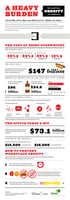
Infographic on Obesity in the Workplace
The following infographic from
mashable.com shows how obesity, growing ever more prevalent in workplaces across the country, can cost your company valuable money and resources. Implementing health and wellness programs for employees using small incentives, such as gift cards to assist in living a healthy lifestyle, such as the
CVS/Pharmacy Select Card or a GNC gift card can save your company money and keep your employees healthy, productive, and happy in their jobs. Check out the information below to help prevent obesity in your office.

Employee Health and Wellness ROI: Turning Participation Into Business Value
For employers, healthcare is no longer simply a benefits expense. It is a significant and growing financial investment—and in 2026, the pressure to demonstrate value from that investment is intensifying.

The Hidden Cost of Missed Preventive Care for Self-Insured Employers
Healthcare costs continue to be one of the largest and least predictable expenses facing self-insured employers. While organizations often focus on managing pharmacy spend, negotiating provider contracts, or analyzing high-cost claims, many overlook a much simpler problem hiding in plain sight: employees are not completing preventive care.


.png?width=600&height=600&name=3D8DC522-2245-490E-AA26-63567A199A4C%20.png)