


.png)
Incentive strategy is no longer just about what you give. It’s about how fast, how personal, and how seamlessly rewards integrate into increasingly hybrid, digital-first workplaces.
If you’ve already explored the classic “eGift vs. physical gift card” debate, you know there’s no one-size-fits-all answer. But market shifts, workforce expectations, and updated research from 2025–2026 give us clearer guidance than ever before.
Let’s break down what works best now and where each format shines.
→ New! Use our physical vs digital gift card quiz to determine which format is right for your needs.
The Modern Workforce Is Digital, But Still Human
Today’s workforce is more distributed, mobile, and experience-driven than ever. According to Gallup, only 31% of U.S. employees are engaged at work in 2025, with engagement declining post-pandemic and hybrid work becoming the norm.
That decline makes timely recognition even more critical. And speed matters.
Meanwhile, the Incentive Research Foundation (IRF) reports that organizations are prioritizing:
- Immediate recognition delivery
- Flexibility in reward choice
- Scalability across diverse organizations
- Digital distribution to remote teams
Implication for 2026: Digital rewards align naturally with hybrid work environments. But physical rewards still carry emotional weight in high-touch moments.
Generational Preferences Matter
Understanding the nuances of generational preferences is crucial when considering the choice between eGift cards and physical gift cards for employee rewards. Let's explore the generational preferences:
- Millennials' Digital Affinity: Millennials, known for their tech-savvy nature, tend to lean towards eGift cards. Their comfort with online transactions and love for instant gratification make eGift cards a perfect fit for their preferences.
- Gen X's Experience-Centric Approach: Gen-X, on the other hand, values the tangible nature of physical gift cards. They appreciate the in-store experience and see redeeming a physical card as a memorable event, enhancing its overall value.
- Baby Boomers' Sentimental Connection: Baby boomers often prefer physical gift cards due to their sense of nostalgia. They view these cards as a testament to personal touch, strengthening the emotional connection between giver and receiver.
Generational preferences significantly impact the choice between eGift cards and physical gift cards. Understanding these preferences can help you tailor your employee rewards program to resonate with a diverse workforce.
The Market Shift Toward Digital
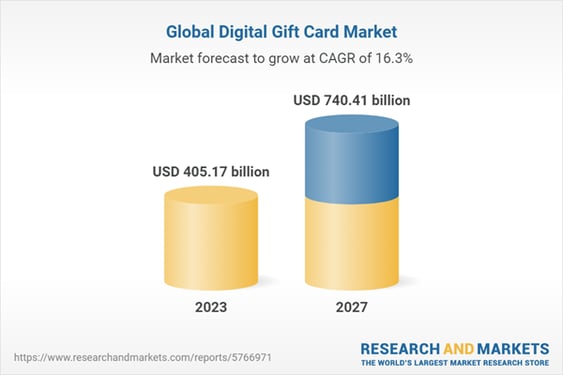
The digital gift card market continues to accelerate. According to Research and Markets, the global digital gift card market is projected to grow at 16% CAGR through 2031, driven by mobile wallet adoption and enterprise bulk distribution needs.
Additionally, Payments Journal notes that digital gift cards now account for a growing share of B2B incentive distribution, particularly for:
- Sales incentives
- Employee spot bonuses
- Healthcare and wellness programs
Why?
- Instant delivery
- Personalization options
- Reduced shipping costs
- Easier bulk fulfillment
- API integrations with HR and incentive platforms
For organizations running national programs or managing compliance-driven incentives, digital is operationally superior.
Physical Gift Cards: Still Powerful in the Right Context
While digital dominates distribution, physical cards retain emotional strength. Research from the Incentive Research Foundation shows that tangible rewards often:
- Increase perceived value
- Create ceremony and social visibility
- Strengthen memory recall of recognition moments
This aligns with behavioral economics: tangible rewards trigger stronger sensory association and can feel more intentional.
Where physical still wins in 2026:
- Executive or VIP recognition
- In-person events and award ceremonies
- Donor appreciation
- Milestone celebrations
If the moment is public and ceremonial, physical can elevate impact.
The Hybrid Solution: Give the Recipient the Power
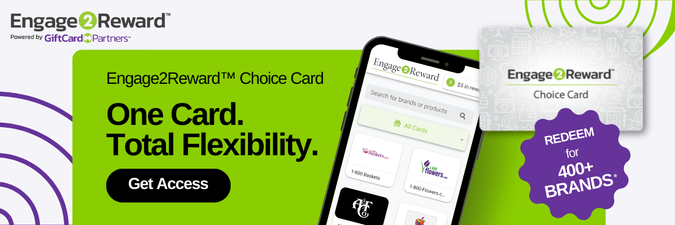
This is where the Engage2Reward™ Choice Card stands out for modern incentive programs. Why it works in 2026:
1. Total Flexibility: Recipients select from 400+ digital or physical gift card options within the Engage2Reward™ Gift Card Ordering Platform.
2. Personalization at Scale: Add branded messaging, images, and custom greetings, bringing emotional value back into digital delivery.
3. Ideal for Hybrid Workforces: Instant digital distribution via email or SMS across remote, field-based, and in-office employees.
For incentive buyers focused on measurable ROI, this combination of flexibility + operational control is increasingly non-negotiable.


So, What Works Best for 2026 Incentive Programs?
Use Digital When:
- You need bulk, fast distribution
- Your workforce is remote or national
- Administrative efficiency matters
- You need tracking and reporting
Use Physical When:
- You’re recognizing top-tier performers
- The moment is ceremonial
- You want a tactile, public presentation
Use a Flexible Choice Solution When:
- You want generational neutrality
- You need personalization at scale
- You want to future-proof your program
Conclusion
As the great debate between eGift cards and physical gift cards rages on, one thing is clear: there's no one-size-fits-all answer. Generational preferences and the context of gift giving play a pivotal role in making your employee rewards program truly effective. The choice between physical and eGift cards ultimately depends on the target audience, the nature of the relationship, and the convenience factors involved in the gifting process, reflecting the evolving dynamics of gift-giving in business settings.
The organizations that win engagement aren’t asking: “Which format is better?”
They’re asking: “How do we deliver recognition in the way our people value most?”
If you’re evaluating formats, call us today to explore your options or use our physical vs. digital gift card quiz above to determine which structure best supports your program goals.




.png?width=600&height=600&name=3D8DC522-2245-490E-AA26-63567A199A4C%20.png)