



CVS/pharmacy Rewarding ExtraCare Members
Running low on shampoo, toothpaste, paper towels or cold medicine? Grab your free bag with purchase and start filling it up. CVS/pharmacy has announced a promotion for their ExtraCare Members giving them 30% off their purchase at all of their 7,800 store locations. All members have to do is go into their local CVS/pharmacy and scan their ExtraCare card at the ExtraCare Coupon Center and from now until May 26 they will receive a 30% coupon each week to use on more than 3,000 CVS/pharmacy exclusive items. In an article from Retailing Today, Cia Tucci, VP of store brands for CVS/pharmacy, said;

Ensure Your Third-Party Gift Cards are Properly Merchandised and in Stock
The third-party gift card segment has consistently been one of the fastest growing gift card distribution channels for the last seven years. Third-party can easily be your largest sales channel outside of your own stores. Actively engaging in third-party sales can increase your brand footprint, reaching consumers that may have not known about your brand otherwise. Having ongoing, frequent dialogue with your third-party aggregator is key to understanding what exactly their retail partners are doing to drive your gift card sales. The aggregators provide you with access to your sales, but do you know why your sales may be trending up or down? Ensuring that your third-party gift cards are properly merchandised and in stock is one of the most critical components to why your sales may be trending positively or negatively. If your gift card is not available when a customer wants to buy it, you have a lost a sale and a visit to your establishment. Here is a list of additional questions to consider when analyzing your third-party program:
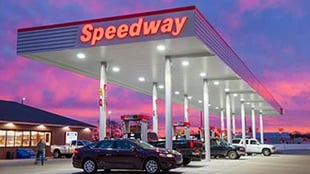
Speedway Acquires Hess
On September 30, 2014, Speedway LLC, closed on its acquisition of Hess’ retail operations and related assets. This acquisition provides Speedway a significant growth opportunity by expanding their retail presence from 9 states to now 23 states throughout the East Coast and the Southeast regions. Over the next three years, Speedway will begin re-branding Hess stores to the Speedway identity, which is scheduled to begin early this year.

Gift Cards as an Incremental Sales Driver
Many retailers think of gift cards as a necessary item that gives consumers flexibility in purchasing and gifting. However, FirstData's
2014 Prepaid Consumer Insights Survey reveals that gift cards can actual hold the power to drive incremental sales for retailers, and the better news is that gift card sales are on the rise, with an 8% boost in sales between 2013 and 2014.
Incremental Sales Driver Gift cards drive incremental sales when consumers purchase past the value of the gift card. According to the FirstData study, in 2014 consumer spent an average of $23.41 over the amount of their gift card, up about $3 from 2013. As this consistent consumer behavior takes root, retailers can use gift card purchasing numbers to forecast this unique source of incremental revenue. The additional spending also represents the opportunity to gain new consumers and build a relationship with shoppers who wouldn't have otherwise entered the store. Using gift cards as a customer acquisition tool can help increase incremental revenue numbers that stem from gift cards and gifting.
Gift Card Popularity on the Rise Gift cards have long been a popular gift choice for those picky recipients and continue to offer consumers a safe gifting option that is easier on both the sender and receiver.
81% of consumers plan to spend the same or more in plastic gift cards, with
84% of consumers planning to purchase the same or more in e-gift cards. These strong numbers indicate a real opportunity for retailers to take advantage of the incremental revenue from extended spending on top of the value of gift cards. The flexibility of gift cards provides a desired convenience for consumers as well as a revenue opportunity for retailers. We want to know what gift cards do for your business? Leave us a comment.

Digital Gift Cards: The Omnichannel Answer?
86% of digital marketers agree that investing in implementation of omnichannel strategies outweighs the challenges. The outcomes can yield a great success story, but the challenges are many. Supply chain management, product availability, and now payments and gifting are all components of the customer experience that need to remain consistent across both online and in-store buying experiences. However, as retail marketers look for new innovative solutions to omnichannel adoption there may be one sitting right in front of them, ready to go. Digital gift cards can't solve all of the omnichannel questions but in terms of payments and gifting they offer an already packaged solution. Digital gift cards are flexible by design, making sending, delivery and redemption easier for the gift giver, the gift receiver and the retailer administering the card. The flexibility and ease of use of digital gift cards helps accelerate


.png?width=600&height=600&name=3D8DC522-2245-490E-AA26-63567A199A4C%20.png)