



Health plans and care organizations face growing pressure to improve CAHPS scores, yet many still rely on engagement tactics that stop short of driving real behavior change. Mailers, reminders, and education all have a role, but they rarely solve the core problem: members must actually complete care and feel supported doing it. Organizations that treat incentives as a quality improvement tool, not a giveaway, are seeing measurable gains in satisfaction, access, and follow-through.
This article explores how outcome-based, digital healthcare incentives help improve CAHPS scores by driving visit completion, supporting care engagement, and reducing access barriers, particularly for underserved populations.
Understanding the Difference Between HEDIS and CAHPS
Before exploring how outcome-based rewards influence CAHPS performance, it’s important to clarify how CAHPS differs from HEDIS. While both are critical components of healthcare quality measurement and Medicare Advantage Star Ratings, they evaluate very different dimensions of care.
HEDIS (Healthcare Effectiveness Data and Information Set) is managed by the National Committee for Quality Assurance and focuses on whether evidence-based clinical care occurred. HEDIS answers questions like: Did the member receive a recommended screening? Was a chronic condition appropriately monitored?
- Primary focus: Clinical quality and preventive care
- How it’s measured: Claims data, medical charts, and electronic health records
- Examples: Breast cancer screenings, immunizations, diabetes control, blood pressure management
In contrast, CAHPS (Consumer Assessment of Healthcare Providers and Systems) is overseen by the Agency for Healthcare Research and Quality and measures how members experience their care. CAHPS reflects the member’s perspective on access, communication, and support — not just whether a service technically occurred.
- Primary focus: Patient experience and satisfaction
- How it’s measured: Standardized patient surveys
- Examples: Getting care quickly, ease of scheduling, customer service interactions, overall plan rating
In simple terms, HEDIS captures what happened in the exam room; CAHPS captures how it felt to the person sitting in it.
Both HEDIS and CAHPS are used by the Centers for Medicare & Medicaid Services to calculate Medicare Advantage Star Ratings, but they behave very differently in response to engagement strategies. Clinical reminders and provider workflows can improve HEDIS scores, while CAHPS scores rise when members successfully complete care and feel supported in the process.
That distinction matters because CAHPS performance is especially sensitive to friction — missed appointments, delayed follow-up, access barriers, and unmet expectations. This is where outcome-based incentives play a unique role: not by proving that care was delivered, but by helping members actually get there and perceive the experience positively.
Action, Not Awareness, Drives CAHPS Success
CAHPS performance reflects real member experiences, not good intentions. Scores improve when plans design engagement strategies around completed actions rather than awareness alone.
- CAHPS measures behavior, not intent: Many CAHPS questions focus on whether members received care, accessed services without difficulty, and felt supported. When appointments or screenings are missed, satisfaction scores decline. This directly affects Medicare Advantage Star Ratings, where CAHPS measures account for a meaningful share of quality bonus eligibility (1).
- Education alone does not remove barriers: Reminders and educational outreach do not address transportation, cost, or time constraints. Research from public health and quality organizations shows that financial incentives can meaningfully increase participation in preventive care when financial or logistical barriers would otherwise prevent follow-through (3).
- Support drives satisfaction: When plans actively help members complete care, members report better experiences with access, communication, and overall support. Those perceptions are reflected directly in CAHPS survey responses.
In practice, CAHPS improvement happens when plans design engagement around completion, not intent. Reducing friction and enabling follow-through is what ultimately changes how members answer the survey.
.png?width=900&height=96&name=e2r-start-incentivizing-banner-ad%20(1).png)
Outcome-Based Incentives Boost Engagement and Satisfaction
Outcome-based incentives are most effective when tied to actions members control and delivered close to the point of completion. When designed intentionally, they support both engagement and trust.
- Timely incentives drive completion: Incentives tied to specific actions such as annual wellness visits, screenings, or care management check-ins are widely used to encourage follow-through on preventive and ongoing care activities (3).
- Reward timing influences participation: Research from the Incentive Research Foundation shows that reward timing and frequency influence motivation, with closer alignment between action and reward associated with stronger engagement outcomes (2).
- Recognition strengthens trust: Incentives signal appreciation for members’ effort, reinforcing the perception that the plan values their time and participation. This recognition can support satisfaction without relying solely on repeated outreach.
When incentives are clearly earned and delivered without delay, they serve as a behavior-support tool that improves both participation and perceived support. For examples of pharmacy-aligned incentive execution, explore Healthcare Engagement Through Pharmacy Wellness Incentives.
Instant Digital Rewards Reduce Barriers and Boost Equity
How incentives are delivered matters as much as the incentive itself. Digital, health-aligned rewards reduce friction and support equitable access to care.
- Immediate digital delivery supports follow-through: Digital fulfillment allows rewards to be delivered quickly, reducing administrative burden and keeping the reward closely connected to the completed action. Public guidance on incentive design highlights the importance of minimizing delays and operational complexity (2).
- Health-aligned incentives address real needs: Pharmacy and essentials-based rewards can help members afford medications, nutrition, and wellness items, supporting access to care without restricting member choice (3).
- Equity-focused design supports access: Preventive care incentives are commonly used to address access barriers among Medicaid and underserved populations, where financial or logistical support can help improve screening and visit completion (3).
By reducing delays and aligning rewards with daily needs, digital incentives help close access gaps while improving experiences measured by CAHPS.
Short on time? Listen to the podcast episode on-the-go.
Measuring the Impact of Incentive Programs
For incentives to function as a quality improvement strategy, they must be measurable. Successful programs rely on clear metrics that connect member behavior to experience outcomes and financial performance.
- Increased visit and screening completion rates: Track changes in preventive visit, screening, and assessment completion before and after incentives to quantify behavior change tied to the program.
- Reduced no-show and missed appointment rates: Monitor declines in no-shows among incentivized populations to assess whether rewards are improving appointment follow-through.
- Improved member satisfaction and CAHPS-related metrics: Evaluate changes in CAHPS composites related to access, care coordination, and overall plan experience among members exposed to incentives.
- Cost per completed action vs. non-incentivized outreach: Compare incentive spend to outcomes achieved versus traditional outreach methods such as call centers or mailed reminders.
- Reduced manual outreach and follow-up costs: Measure operational savings from fewer reminder calls, reduced rescheduling, and lower administrative burden.
Together, these metrics position incentives as a defensible, data-backed lever for improving CAHPS performance while maintaining financial accountability and alignment with quality improvement standards (1).
Practical Next Step
Organizations looking to improve CAHPS scores should evaluate where member drop-off occurs, then align incentives to the actions that matter most. Outcome-based rewards work best when they are immediate, measurable, and relevant to members’ daily lives.
Research shows that monetary incentives are associated with substantial increases in survey response rates, with studies reporting median boosts of about 12 percentage points (and in some cases up to 20 points) compared with no incentive. This means members are significantly more likely to complete surveys like CAHPS when a reward is offered.
Executing CAHPS-Focused Incentives with Gift Cards
Scaling outcome-based incentives requires speed, visibility, and compliance. The Engage2Reward™ Gift Card Ordering Platform enables organizations to execute incentive strategies tied directly to CAHPS-related behaviors while maintaining control and transparency.
Engage2Reward Platform features:
- Real-Time Delivery: Enjoy instant gratification with real-time gift card delivery, digital or physical, ensuring rewards arrive when motivation is highest.
- Meaningful and Valuable Rewards: Customization and personalization options add meaning and relevance, increasing perceived value and member satisfaction.
- Flexible Payment Options: Secure payment methods including ACH, wire, credit card, check, and deposit account setup support finance and operations teams.
- Comprehensive Dashboard: Access a detailed view of program KPIs, participation trends, and reward distribution to measure impact and ROI.
- Customer Support: GiftCard Partners provides live, on-shore customer support to resolve issues quickly and protect the member experience.
- Health-Aligned Incentives: Consider CVS® or CVS Select® Gift Cards to support healthy choices and reduce access barriers.
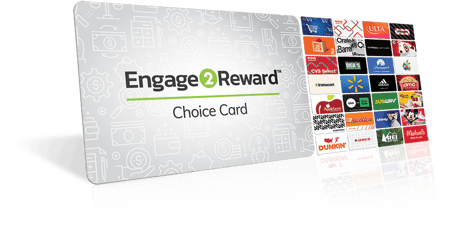
For programs where autonomy matters, the Engage2Reward™ Choice Card allows members to select the reward that best fits their needs while maintaining centralized program management.
Ready to boost member satisfaction and increase CAHPS scores? Schedule a call with our team to learn how the Engage2Reward Platform empowers organizations with the flexibility and scalability of gift card incentives.

References
(1) Centers for Medicare & Medicaid Services. Medicare 2026 Part C & D Star Ratings Technical Notes. CMS, 25 Sept. 2025, https://www.cms.gov/files/document/2026-star-ratings-technical-notes.pdf.
(2) Incentive Research Foundation. “Academic Research in Action: The Effect of Reward Frequency on Performance.” IRF, https://theirf.org/research_post/academic-research-in-action-the-effect-of-reward-frequency-on-performance/.
(3) Solcz, Jessica, et al. “Patient Financial Incentives for Preventive Care.” County Health Rankings & Roadmaps, University of Wisconsin Population Health Institute, 2025, https://www.countyhealthrankings.org/strategies-and-solutions/what-works-for-health/strategies/patient-financial-incentives-for-preventive-care.
(4) National Committee for Quality Assurance. Health Outcomes Accreditation and Community-Focused Care. NCQA, 2025, https://www.ncqa.org/programs/accreditations-in-health-outcomes-and-community-focused-care/.



.png?width=600&height=600&name=3D8DC522-2245-490E-AA26-63567A199A4C%20.png)